
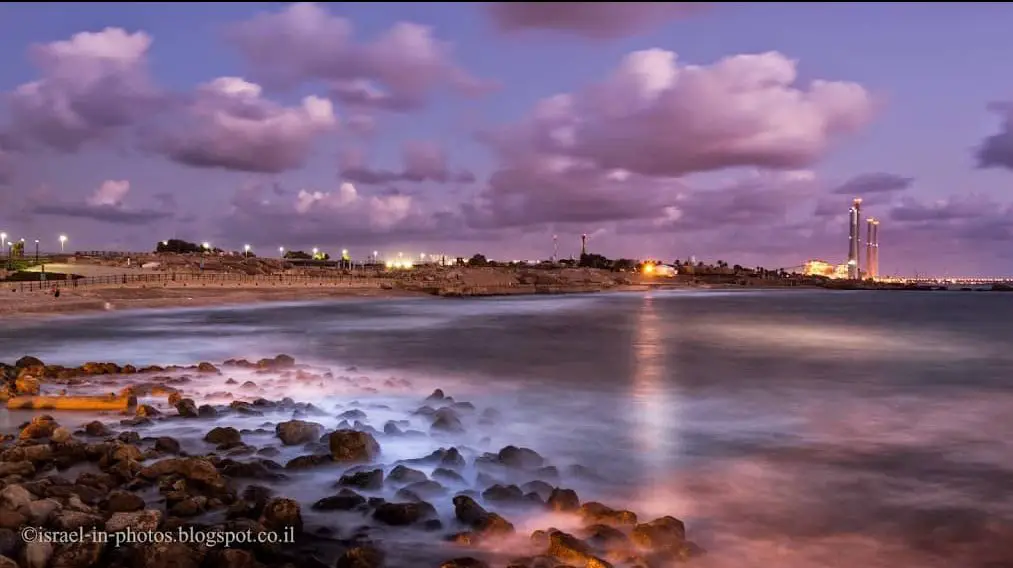
Caesarea National Park – Full Guide to Seaside Roman City

Caesarea National Park is among the most visited sites in Israel. Its archeological remains result from more than 2,000 years of history.
Note: if you are looking for information about the city of Caesarea, not specifically this national park, check out my complete guide to Caesarea.
Map
Caesarea is located halfway between Tel Aviv and Haifa. There are two entrances, and the following links will take you to the parking lot near the southern entrance.
Directions for drivers: Link to Waze and Link to Google Maps
Directions for public transport: Link to Moovit
Interactive map of the area:

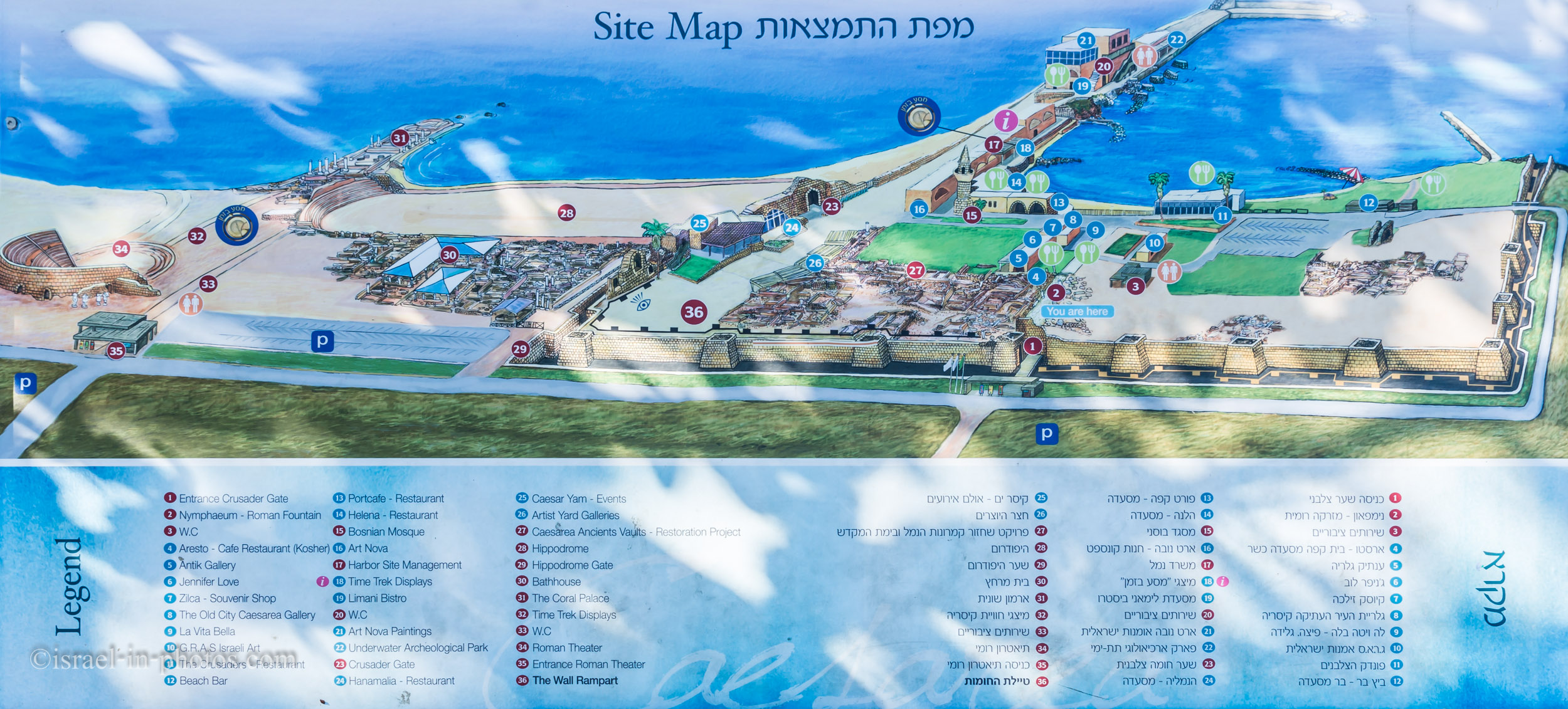
Note: you can click on the maps to enlarge them.
As you can see, there are two entrances, and next to each, you can find free parking.
- The Northern entrance – Crusader Gate entry, is marked as number #1. It leads to Caesarea port.
- The Southern entrance – the Roman theater entry, is marked as number #35. It leads to the other part of Caesarea’s old city, Caesarea Maritima.
And you can go from one part of the old city to another using the gate at #23. But you may be required to show a valid ticket to pass from Caesarea port to Caesarea Maritima.
Caesarea Maritima is a national park. You can visit it only during the mentioned opening hours. If you come within those hours, you must buy an entrance ticket to see the port and the Maritima. And if you are visiting after opening hours, the entrance to Caesarea harbor will be free (and Caesarea Maritima is closed).
Directions
The easiest way to get to this national park is by car. Enter “Caesarea National Park” into the navigation app, and it will get you there. Moreover, there are many free parking spaces on site.
Reaching this national park by public transport is inconvenient. You can take the bus (for example, Egged line #910 from Tel Aviv to Haifa) to Or Akiva interchange. And from there, walk for 2.5 km, or take a taxi. Another option would be to take the train to Caesarea station. But the train station is even further away (than the bus stop), and you must choose either a bus or a taxi.
Here is a link to Moovit, where Caesarea National Park is already set as the destination. Change the origin from Jerusalem to your location, and you will get updated directions.
Opening Hours
Summer Hours
Sunday – Thursday and Saturday: 8:00 – 17:00.
Friday: 8:00 – 16:00.
Winter Hours
Sunday – Thursday and Saturday: 8:00 – 16:00.
Friday: 8:00 – 15:00.
On holidays, usually 8:00 – 13:00.
Entrance Fee
Adult – 39 NIS, child – 24 NIS, and student – 33 NIS.
If you visit several National Parks, consider purchasing a combo ticket. You can find additional info at National Parks And Nature Reserves.
Note: opening hours and ticket prices were updated in October 2023. In any case, recheck the official site before visiting.
Discounts and Coupons
The Israeli Parks and Nature Authority manages Caesarea National Park, and they do not offer coupons. The only way to decrease costs is by purchasing a combo ticket or an annual subscription. You can find additional info at National Parks And Nature Reserves.
Contact Information
Phone: 04-6267080
Facebook: @IsraelNaturParks
The Modern City of Caesarea
Caesarea is a town in Israel located on the Mediterranean coast. It is famous for the ancient city that became Caesarea National Park. But there are also other tourist attractions – for example, the Ralli Museum and Aqueduct Beach. You can find additional information about the city in Caesarea.
Caesarea Maritima
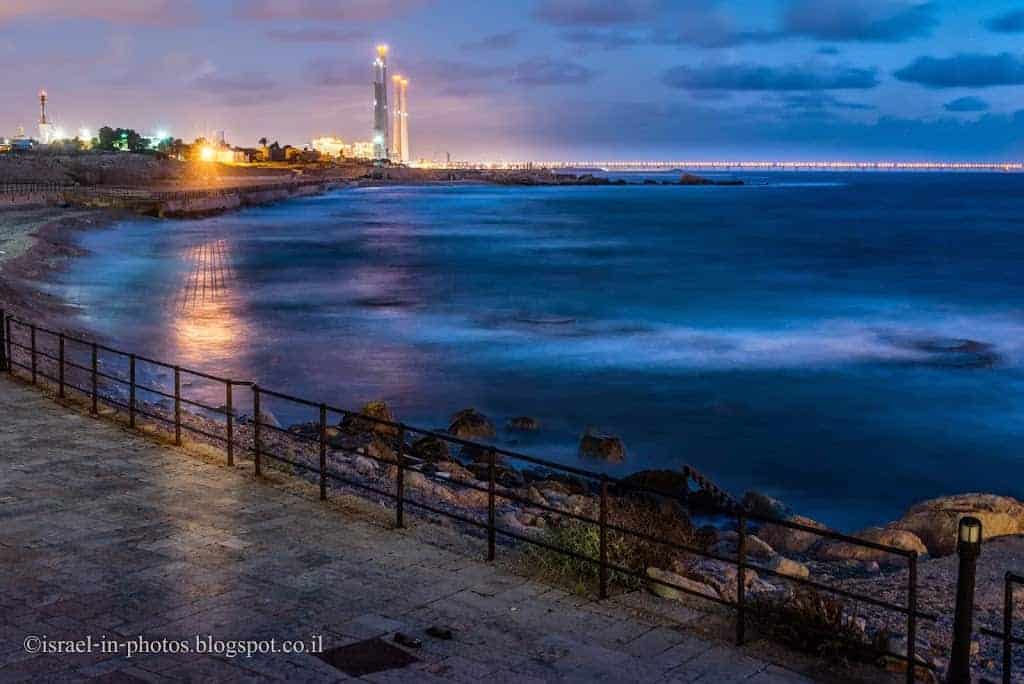
As I mentioned, you can visit this area only during the opening hours of Caesarea National Park. And I took the following sunset photo from the harbor while the National Park was closed.
View of the sea, Hedera power station, and Caesarea Maritima:
Before exploring Caesarea Maritima on foot, here is a lovely view from viewpoints on the wall Rampart (#36).
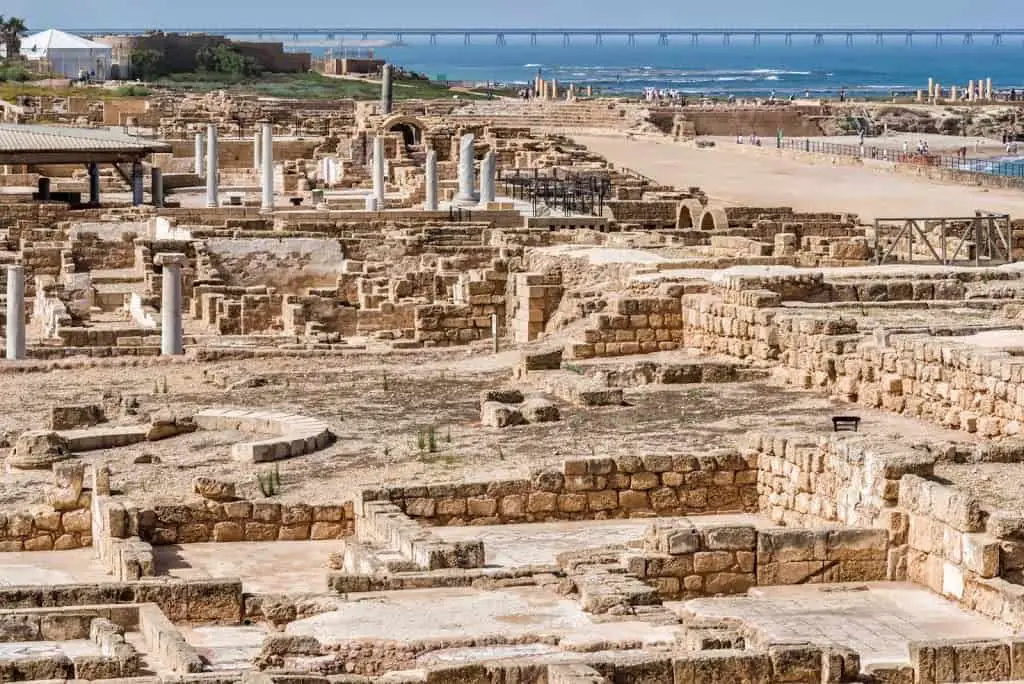
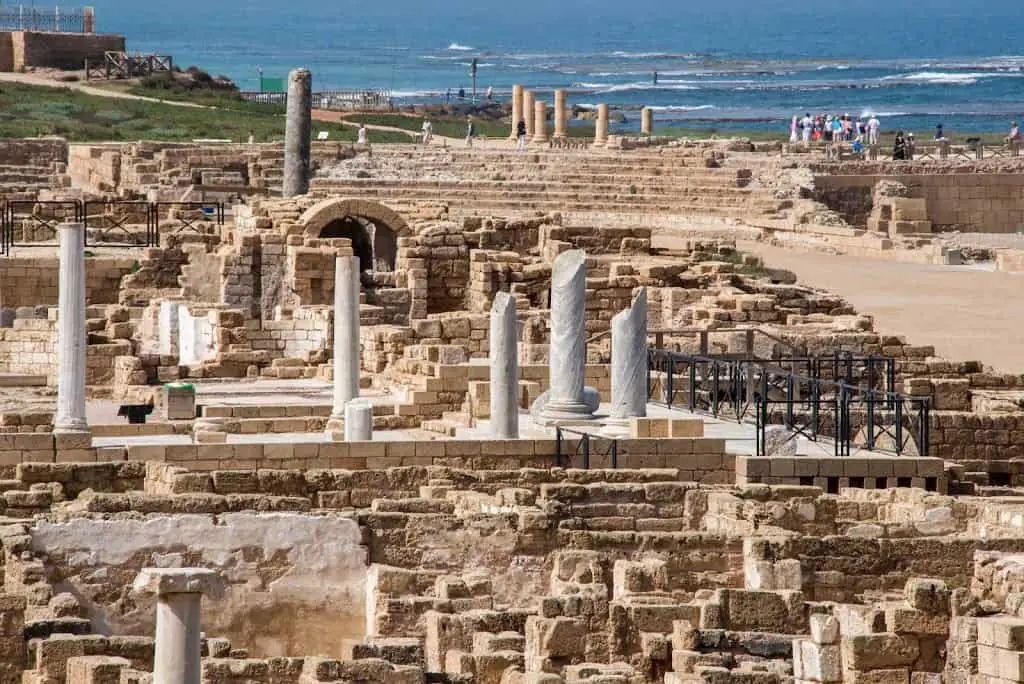
The multiple rooms and the Hippodrome (closest to the sea) are used during events and festivals. You will see more of them at Sukkot Celebrations (further ahead).
And now, let’s begin exploring Caesarea Maritima.
Time Trek Displays
If this is your first visit to Caesarea, I suggest starting at the Roman Theater entry (#35). Near the southern entrance, you can find the “Caesarea Experience” display (#32). It is a 10-minute movie that gives you a historical background. There is also a similar display at the port. They are called “Time Trek Displays” on the map, and the one in the harbor is marked #18.
The movie is available in Hebrew, English, Arabic, Spanish, Russian, German, and French. Here we are, watching in Hebrew with subtitles in Russian.
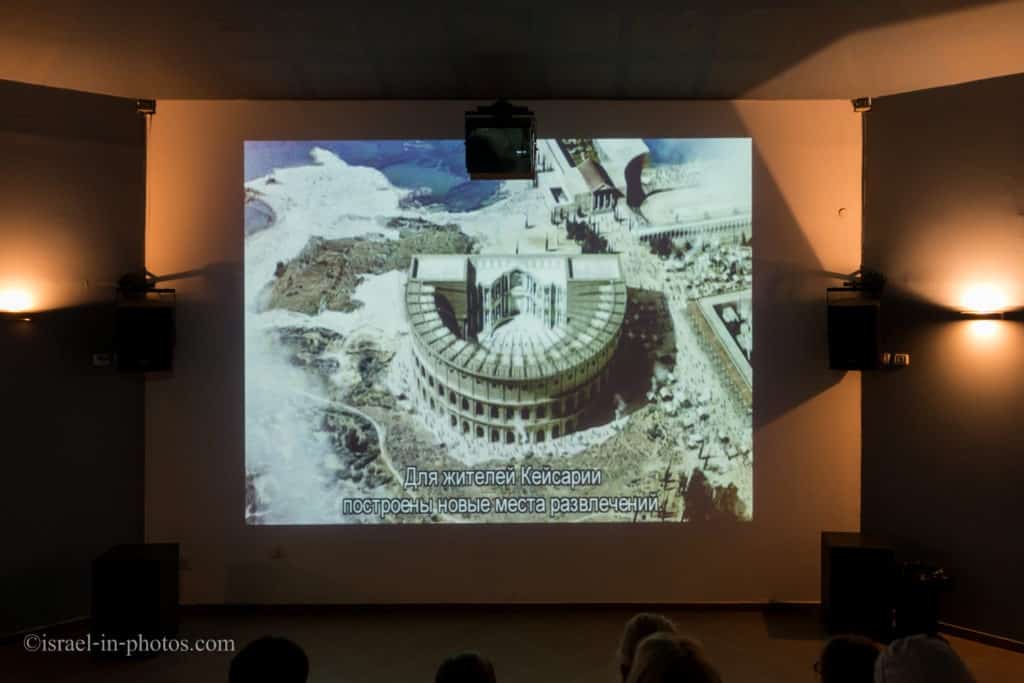
After the movie ended, we headed to the most impressive building on-site – the theater.
The Roman Theater
The Roman Theater – the theater structure, an impressive and powerful building, stands at the southern edge of the national park. People from the highest and lowest walks of life came here to enjoy dramas and comedies. The classic model of Roman theaters influenced the shape of the theater: a semi-circle, in which were built blocks of cavea (seats) separated by vomitoria (entrances and exits). The arena – an area at the foot of the seats, was often used for the performances. The orchestra (stage area) which in Caesarea had a high and impressive scaenae frons (stage backdrop) and also underground rooms – dressing compartments for the actors.
The well-known term “bread and amusement” originates from the tradition established by Augustus Caesar. And Caesarea is named after him. Being a port city, which hosted sailors and seamen, the leaders of Caesarea needed to keep the visitors occupied, to provide them with places of entertainment, and to amuse them to encourage them to return to the city and enrich its coffers. The theater was one of those means, and it serves in this capacity to this day. In essence, its stage is used for performances by the most significant artists in the country.
The theater was built by Emperor Vespasian, using Roman arch-based technology. At a later stage, King Herod added a few more blocks of seats and enlarged them.
Note: unless stated otherwise, all quotes were taken from the official site.
By the way, Herod the Great was called “the greatest builder in Jewish history.” He is known for his colossal building projects throughout Judea, including the expansion of the Second Temple in Jerusalem, Caesarea Maritima, Masada, and Herodium.
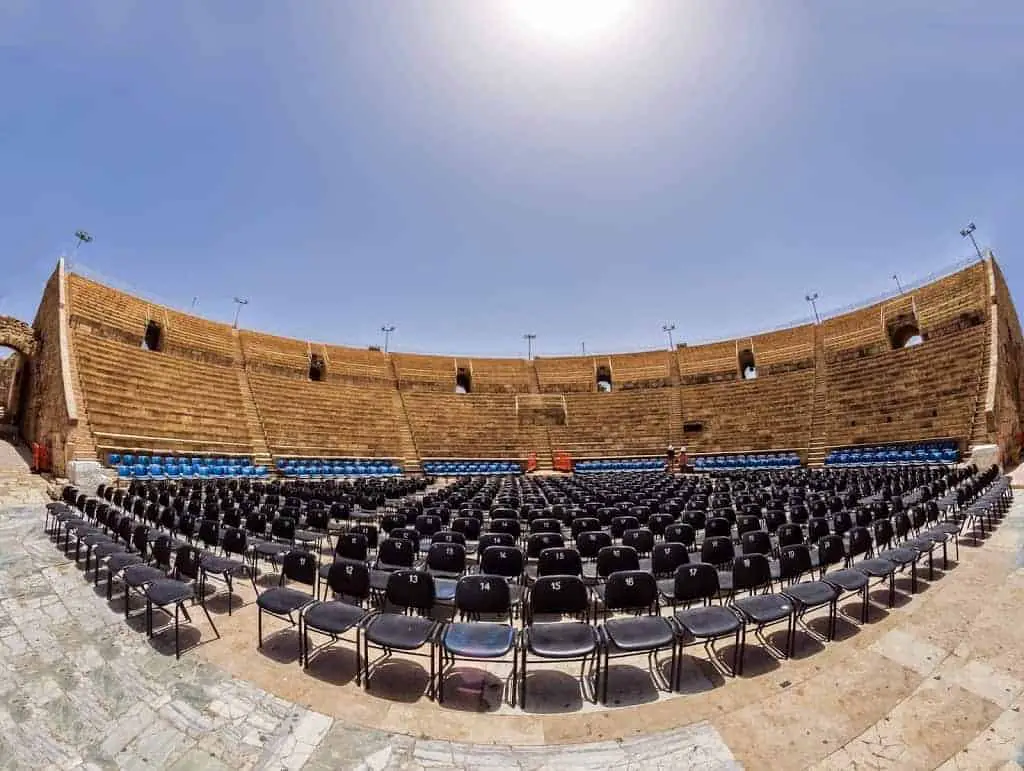
Amphitheater?
Many people confuse a theater and an amphitheater. Do you know what the difference between the Roman Theater and Amphitheater is? For a full explanation, check out Is Caesarea Amphitheater really an amphitheater?
And this is how the theater might look back at the day.
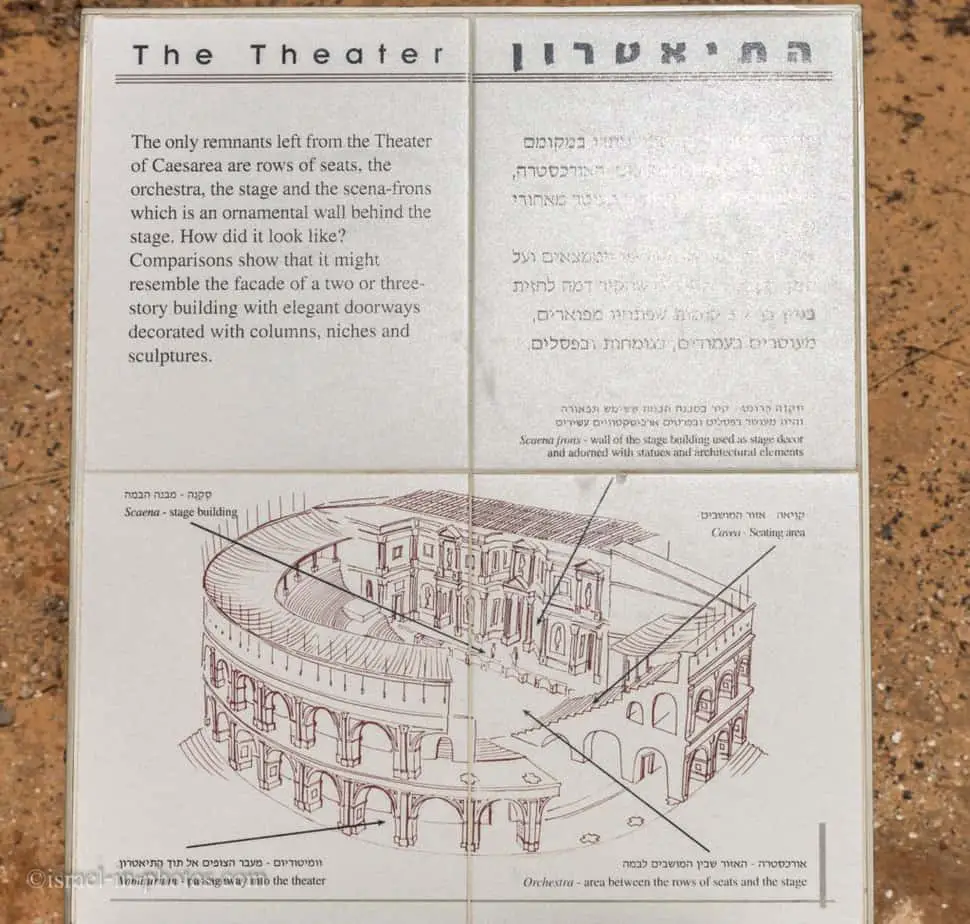
At the time of construction, there were about 4,000 places in the theater. Today, the theater is active and considered a status symbol. Only the top performers perform here. That is probably because selling thus many tickets can be done only by the most famous artists.
Note: the theater is marked as #34 on the site map.
The acoustics of the theater is excellent. No matter where you stand, even at the highest point, you can hear when somebody sings on