Ein Kerem, Jerusalem – Visitors Guide (Map, Attractions, and More)

Ein Karem (Ein Kerem) is a village-like neighborhood in Jerusalem with many churches and attractions within walking distance.
Map
Ein Kerem was an ancient village in the Jerusalem district. Now, it is one of the neighborhoods in southwest Jerusalem.
Directions for drivers: Link to Waze and Link to Google Maps
Directions for public transport: Link to Moovit
Interactive map of the area:
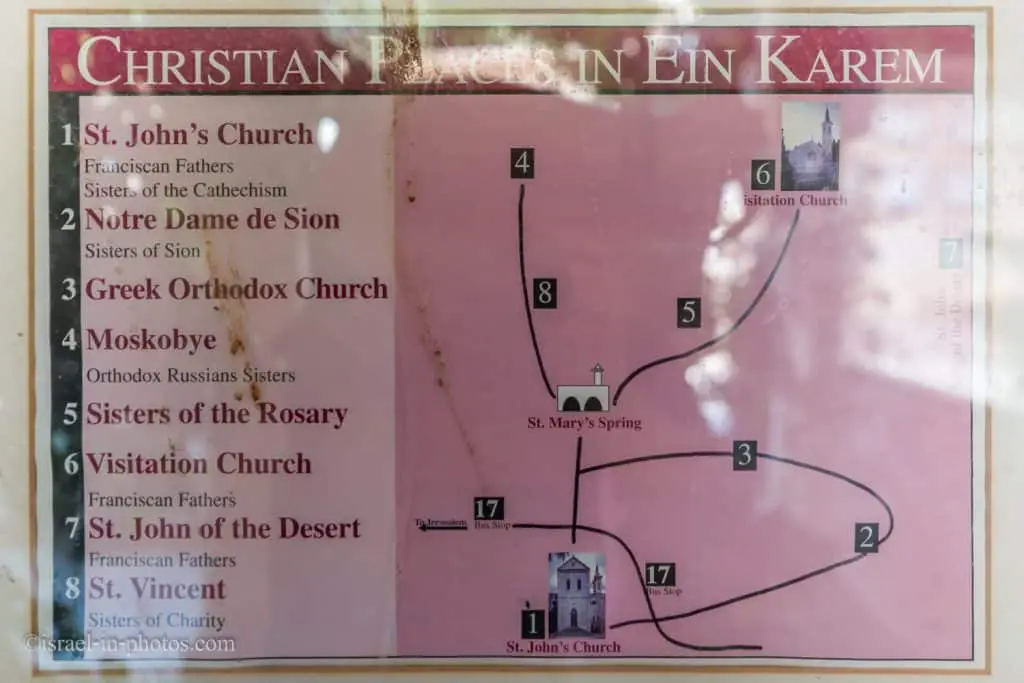
Here is a map of Ein Kerem’s attractions:

Notes:
- You can click on the map to enlarge it.
- The map also lists restaurants (blue), artists (green), and B&B (red).
Directions
If you use public transport, you will probably take bus #28. Here is a preset link to Moovit. In this link, the destination is already set, and to get the updated directions, set the starting point.
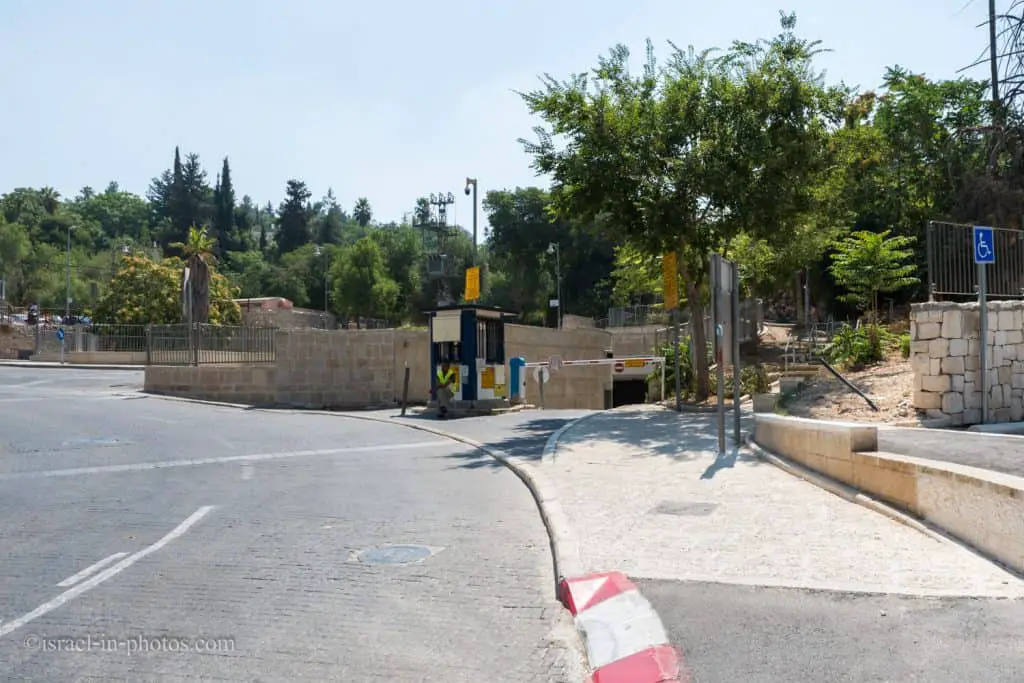
The bus stop of line #28 is located on Ein Kerem Street near the point of interest #2 (see the map above). On the other side of the road, you can find public parking. It is a free parking lot located close to all the attractions. The only downside is that this is not a big parking lot and can fill up quickly. Thus, if you are driving there, I would suggest arriving early.
What Does Ein Kerem Mean?
The literal translation of Ein Kerem from Hebrew means “Spring of the Vineyard”.
Ein Kerem – General Info
Ein-Kerem, the village, and its surrounding geographical basin have been continually occupied since ancient times. The village boasts a freshwater spring and a unique mixture of vernacular and monumental architecture.
Built-in traditional Arab village building style, narrow alleys, massive stone walls, and thick-walled houses have remained mostly intact. The dramatic biblical landscape surrounding the village, complete with ancient terraces, olive presses, and other agricultural systems, is well preserved and home to a fantastic diversity of flora and fauna. Ein-Kerem is surrounded by ancient olive groves, some of which are 1,200 years old.
Ein-Kerem is considered the birthplace of Saint John the Baptist and the site of Saint Mary’s Visitation. As such, it has become a major Christian pilgrimage site. The first churches, Saint John Ba’Harim and the Visitation, were built in 4th-century Byzantine times, then rebuilt by the Crusaders in the 12th century.
Today’s churches and bell towers were constructed in the 19th century on the Crusader foundations. There are seven active churches and monasteries of different denominations in the village today. In some village houses’ basements, ancient Jewish ritual baths from Second Temple times have been found.
After establishing the State of Israel in 1948, new immigrants from North Africa, Yemen, and Turkey settled in the village. They would draw water from the spring or buy it from water sellers. Kerosene was used to heat their homes. Those were years of austerity, but the fertile land and surrounding orchards gave the villagers plenty of fruit and vegetables.
During the 1920s, many famous artists came to paint Ein Kerem. Among them were Ruben Rubin, Israel Paldi, Ziona Tager, Anna Ticho, and Nahum Guttman. Teddy Kollek, the renowned Mayor of Jerusalem, had intended to turn the village into an artists’ center, but this dream was never fulfilled. Nevertheless, many painters, musicians, writers, and sculptors live and work in Ein-Kerem today. UNESCO considers the village of Ein-Kerem and its surrounding cultural landscape as a World Heritage Site.
Source: sign on site.
As you can see, the Ein Kerem neighborhood has historical importance, but in recent years, the neighborhood has had a turnover, and people visit not only for historical reasons. Many artists live in this neighborhood today, and you can find many galleries. Moreover, many Israelis like to see this picturesque neighborhood because everything is open on Saturdays (despite significant parts of Jerusalem). However, this post will cover several of the most popular tourist attractions.
Mary’s Spring
You can follow Ha-Maayan Street to Mary’s Spring from the parking lot mentioned above.
Note: Mary’s Spring is located near number #1 on the map of Ein Kerem.
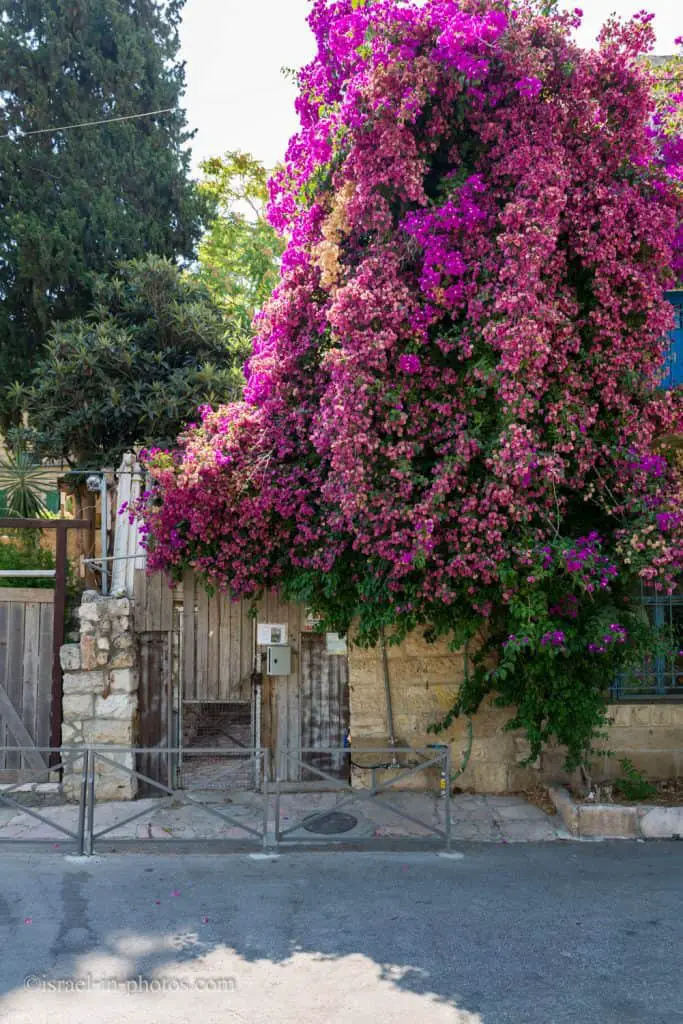
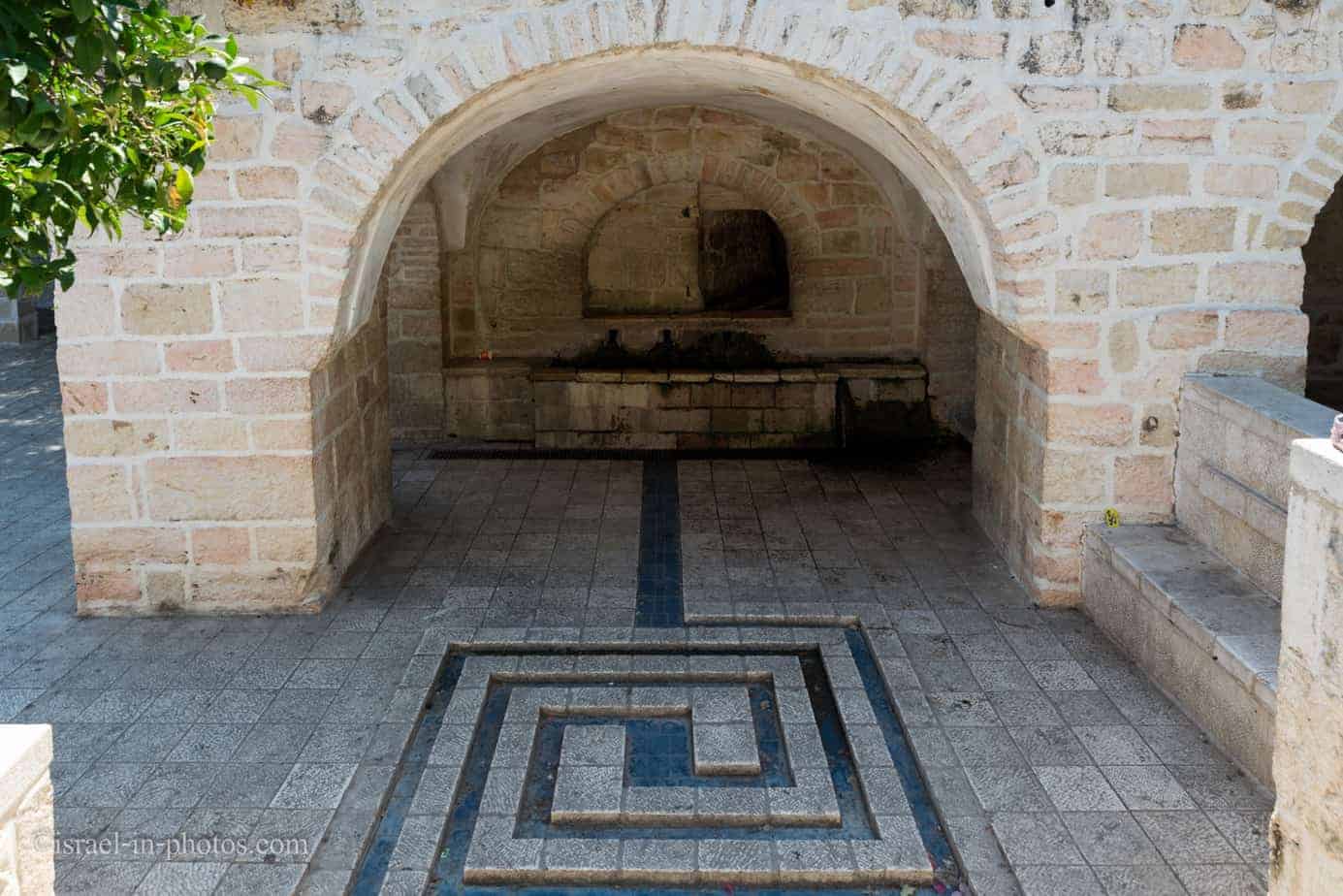
According to a Christian tradition that started in the 14th century, the Virgin Mary drank water from this village spring, and there is also the place where Mary and Elizabeth met. Therefore, since the 14th century, the spring is known as the Fountain of the Virgin. The spring waters are considered holy by some Catholic and Orthodox Christian pilgrims who visit the site and are filling their bottles here. What looks like spring is the end of an ancient aqueduct. The spring itself was always known as one of the best and strongest in the Judaean Mountains, but today its water is not potable due to pollution. The former Arab inhabitants have built a mosque and school on the site, of which a Maqam (shrine) and minaret remain.
Source: Wikipedia
Note: according to a sign on-site, drinking water from Mary’s Spring is forbidden.


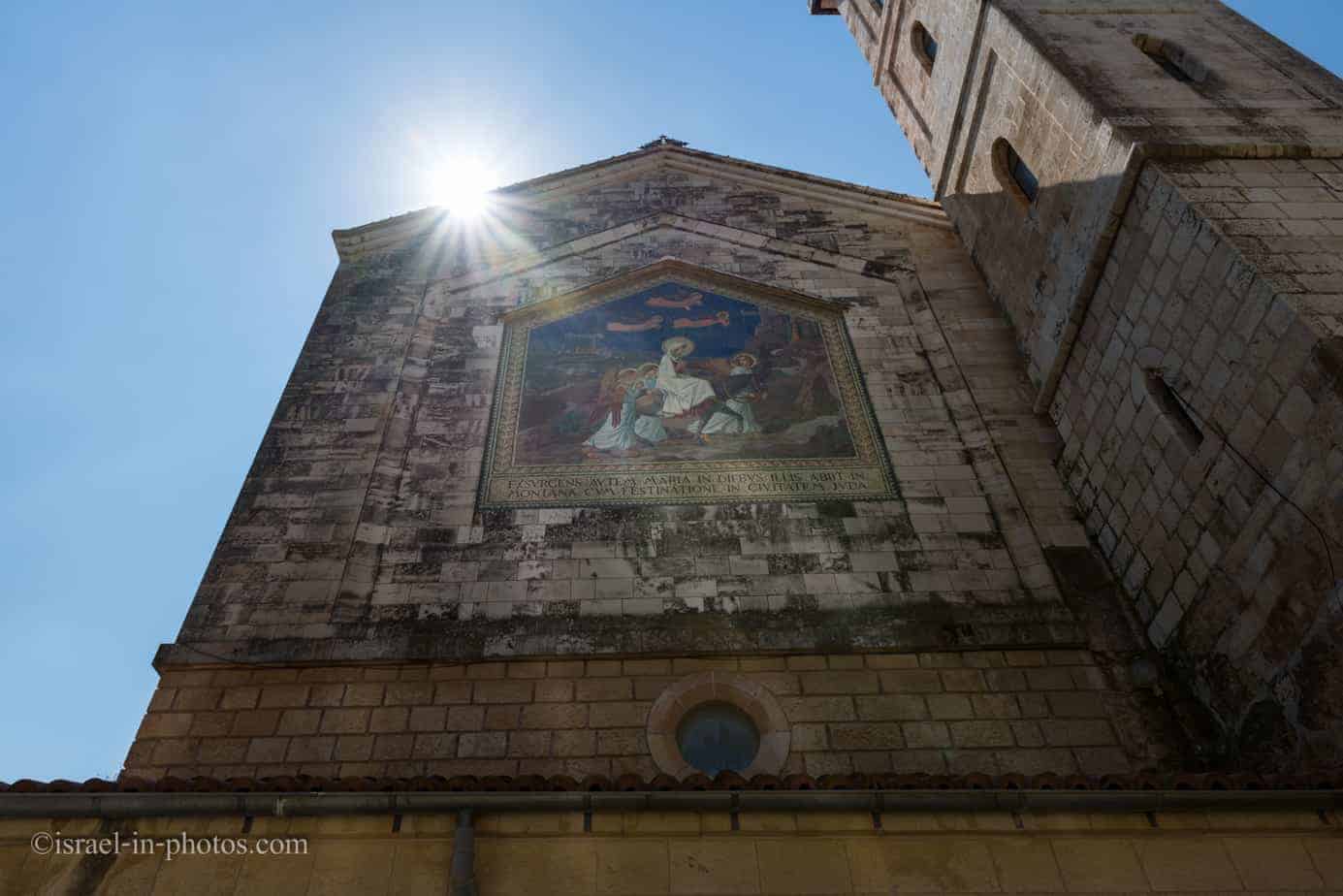
Church of the Visitation
From Mary’s Spring, we will take the stairs toward the Church of the Visitation.
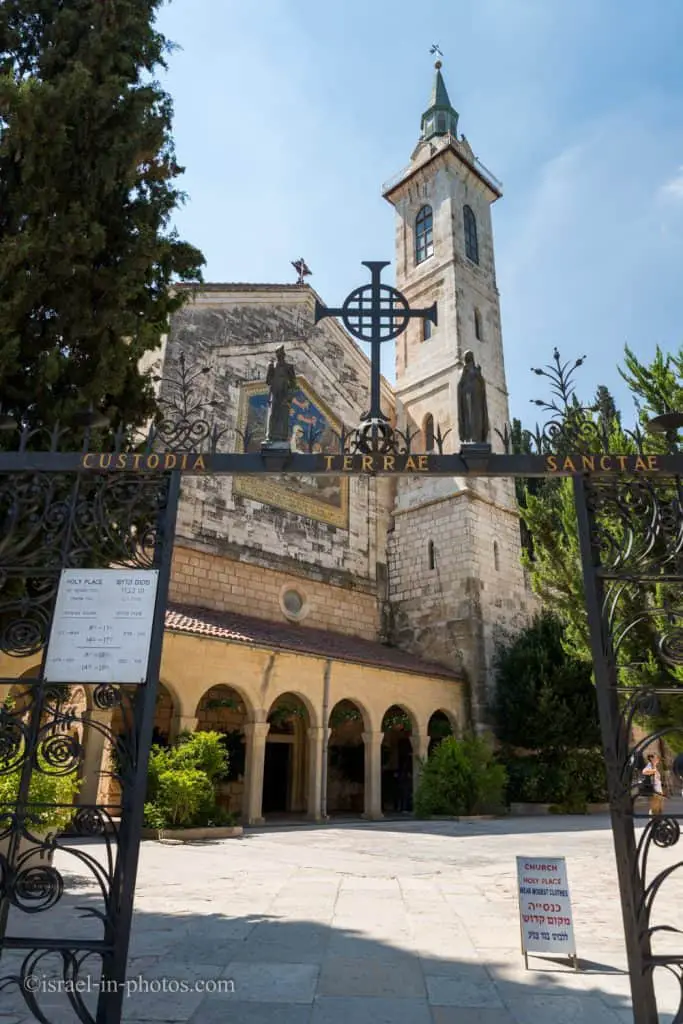
You can find more information about this place in the dedicated guide to the Church of the Visitation.
We will return to Mary’s Spring from the Church of the Visitation. At this point, I want to mention a public restroom. The toilet is located under the viewpoint, about ten meters from Mary’s Spring.
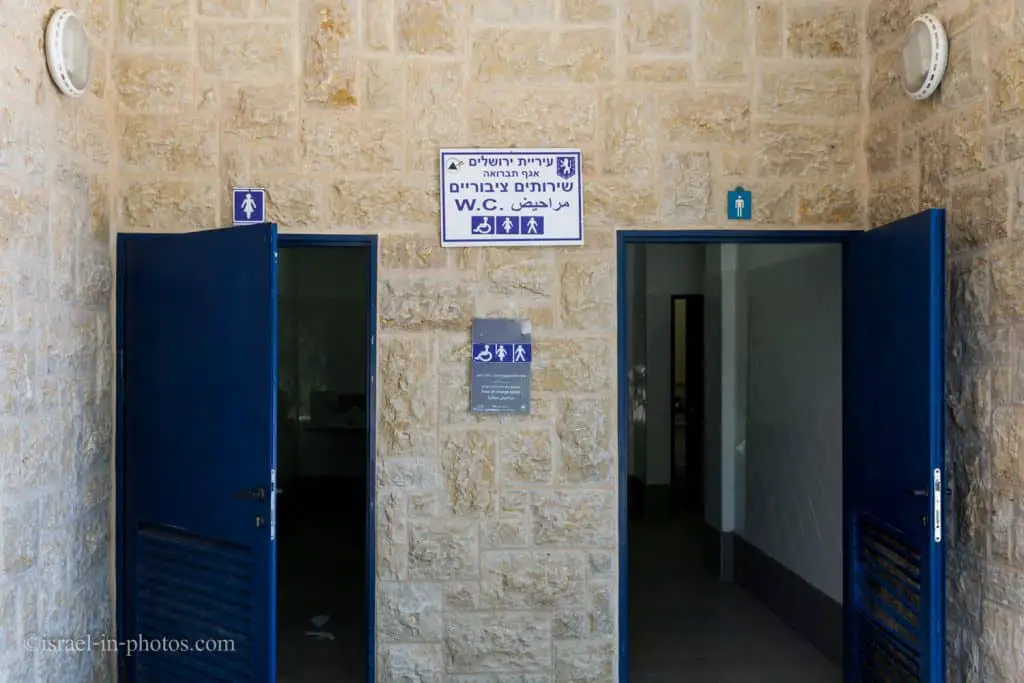
Then, from Mary’s Spring, we will take Ha-Maayan Street (passing near the parking on the way) to the Church of Saint John Ba Harim.
Church of Saint John Ba Harim
Note: The Church of Saint John Ba Harim is also called the Church of Saint John the Baptist.

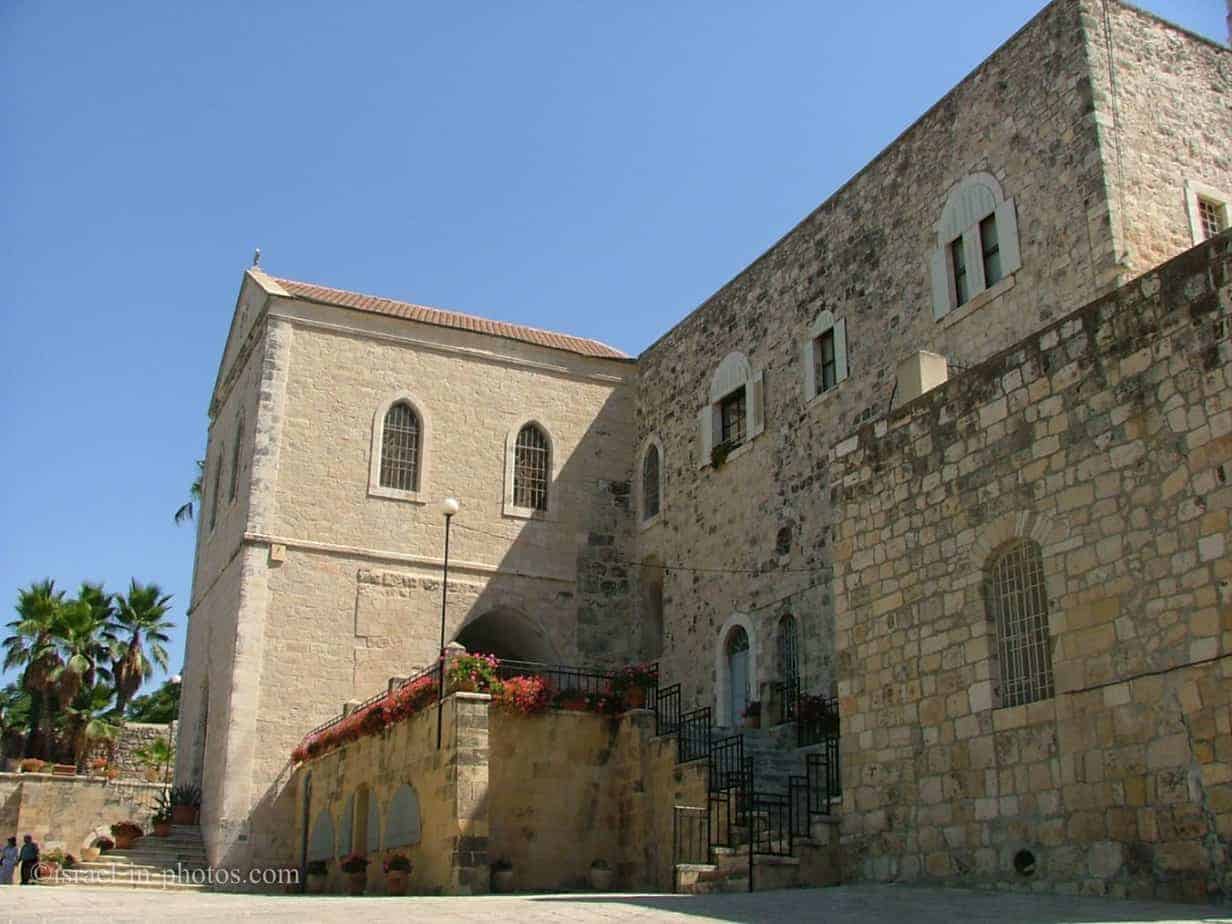
The Church of Saint John the Baptist is a Catholic church in Ein Karem, Jerusalem, that belongs to the Franciscan order. It was built at the site where Saint John the Baptist was believed to have been born.
In 1941–42, the Franciscans excavated the area west of the church and monastery. Here they discovered graves, rock-cut chambers, wine presses, and small chapels with mosaic tiling. The southern rock-cut chamber contained ceramic datable to a period stretching from approximately the first century BC till 70 AD, an interval that includes the presumed lifetime of Zechariah, Elizabeth, and John. The community living here has been dated by the archaeological findings back to the Roman, Byzantine, and Early Muslim periods.
Most of the current church structure probably dates back to the 11th century, with the lower courses possibly dating to the Byzantine period (4th-7th century).
Source: Wikipedia
Church of Saint John Ba Harim is near point #25 on the Ein Kerem map.
Church of Saint John the Baptist – Opening Hours
Summer: 08:00 – 12:00 and 14:30 – 17:45
Winter: 08:00 – 12:00 and 14:30 – 16:45
Chocolate House
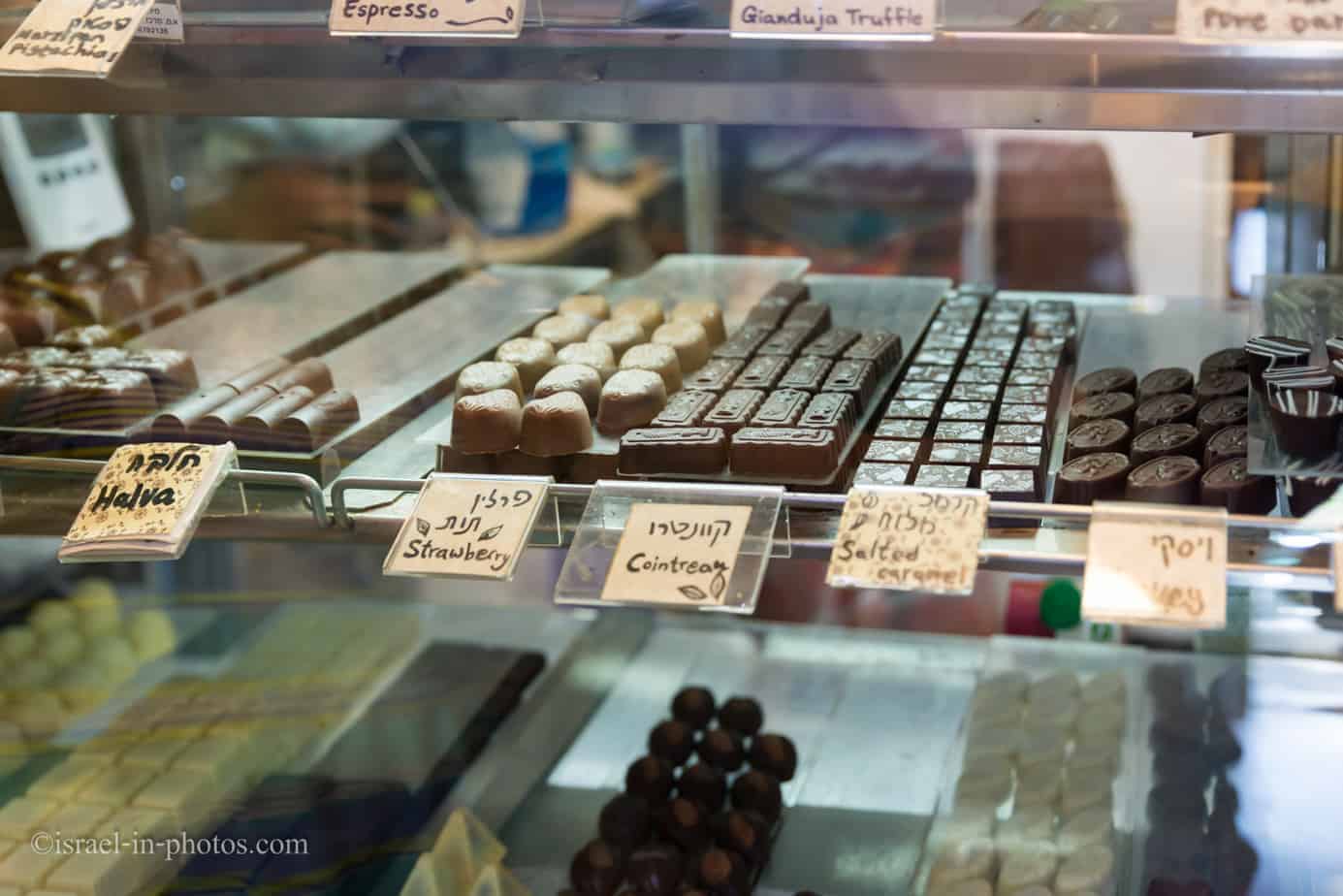
On Mevo Ha-Shaar Street (the street that leads to the Church of Saint John Ba Harim), you can find the Chocolate House. It is a small shop with boutique chocolate and ice cream. Since I saw many positive recommendations, we made a short stop there.
We tried several different kinds, and indeed it was tasty.