
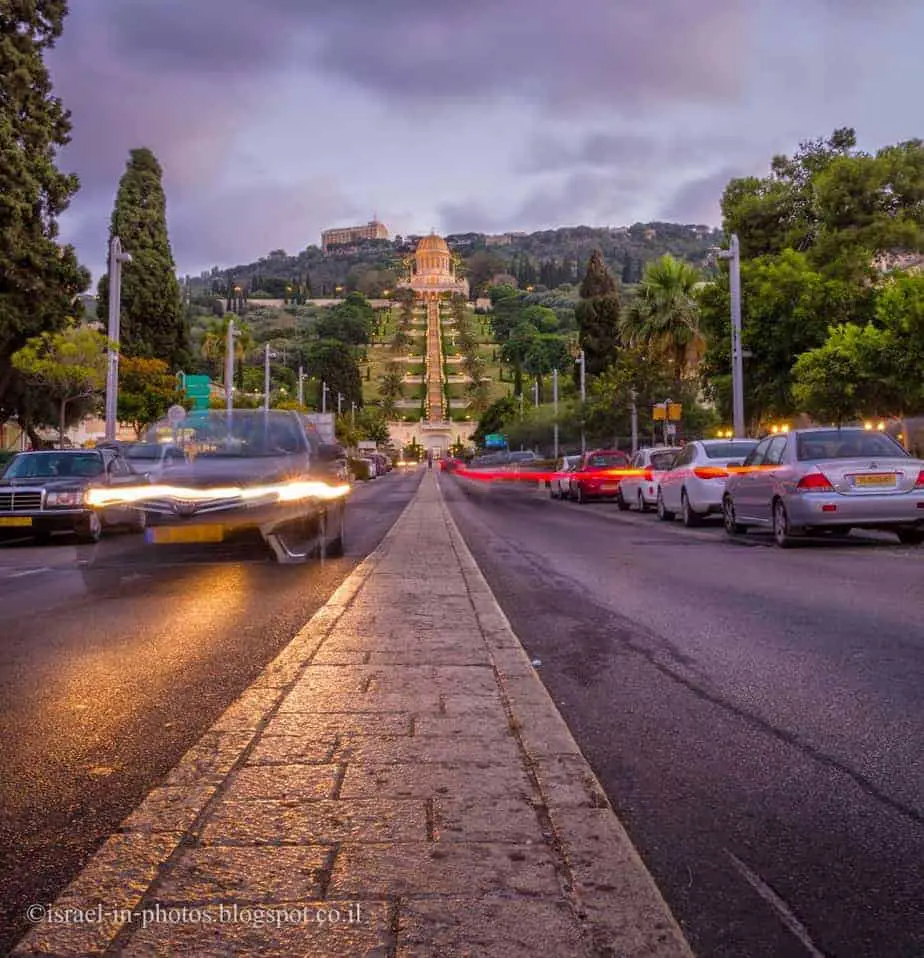
Bahai Gardens, Haifa – Complete Visitors Guide with 30+ Photos

The Bahai Gardens is the most popular attraction in Haifa. They are both free and stunning and tell the story of the Bahai religion.
Map
The gardens have three entrances (see the table below). Here is an interactive map with directions to the main entrance.
Directions for drivers: Link to Waze and Link to Google Maps
Directions for public transport: Link to Moovit
Interactive map of the area:
Three Entrances and Parking
The Bahai Gardens in Haifa comprise a staircase of nineteen terraces extending up the northern slope of Mount Carmel. The complex geometry is built around the axis connecting it with the City of Akko, which also has great historical and sacred significance for Bahais. At its heart stands the golden-domed Shrine of the Bab, which is the resting place of the Prophet-Herald of the Bahai Faith.
Note: unless stated otherwise, all quotes were taken from the official site.
The terraces start from Ben Gurion street and end on Yafe Nof street. There is one additional entrance on Hatzionut Avenue. Each entry point allows limited access, and you can not go all the way alone. If you want further access, you will have to join a tour.
Here is a list of the entries and where I usually park:
| Name | Location | Description | Parking |
|---|---|---|---|
| The Main Entrance | Hatzionut Avenue 80 | This entry is in the middle of the mountain. And through it, you can access the Shrine of the Bab (the Temple with the golden dome). While there, you can also visit nearby Ursula Malbin’s Sculpture Garden. | Finding parking along Ben Gurion Street is pretty much mission impossible. Thus I usually drive to a paid parking lot (there are several along HaGanim Street). Keep in mind that it is a one-way street. Or park a little further away, like Derekh Yafo 104 and Tel Aviv Street, and walk from there. |
| The lower entrance | It is located in the German Colony, more specifically Ben Gurion Street (HaGefen Street 21) | Finding parking along Ben Gurion Street is pretty much mission impossible. Thus, I usually drive to a paid parking lot (there are several along HaGanim Street). Keep in mind that it is a one-way street. Or park a little further away, like Derekh Yafo 104 and Tel Aviv Street, and walk from there. | |
| The upper entrance | Yafe Nof Street 61 | It is part of the Louis Promenade and offers breathtaking bay views. | You can find parking at Yaffe Nof Street, just a bit further away, like Yaffe Nof 40. Also, at Yefe Nof 46, you will see a street going uphill. It is a public parking lot. |
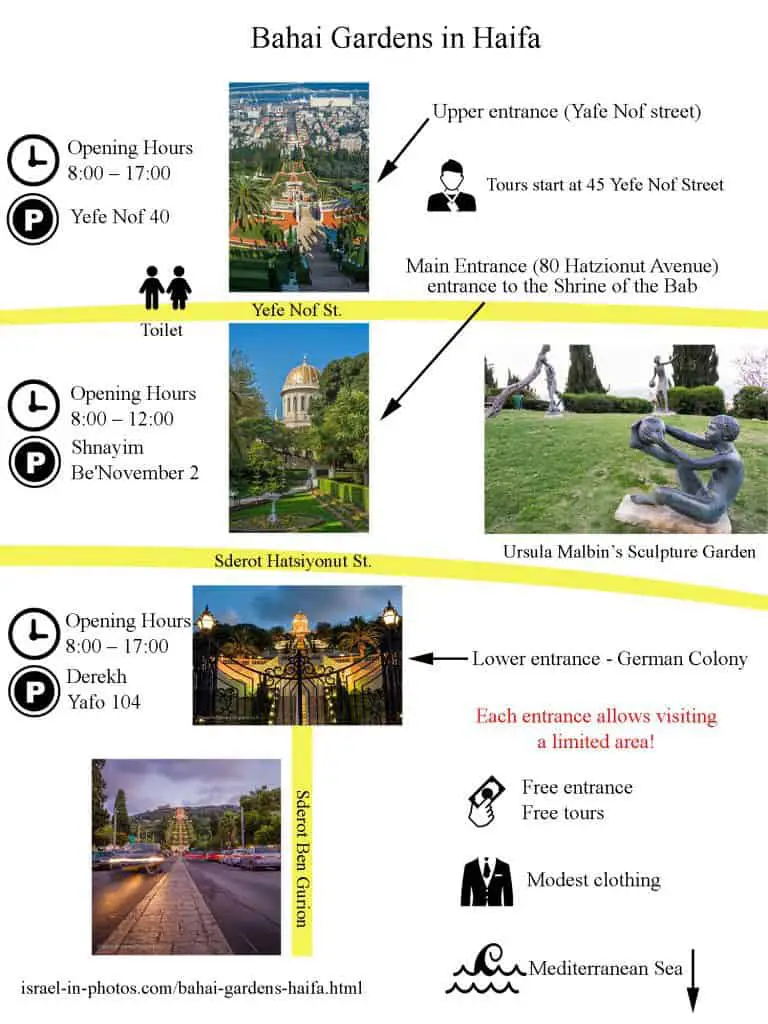
And in this post, we will visit all of them.
Note: if you have general questions regarding navigation and parking apps, check out Useful Information For Tourists To Israel.
Entrance Fee
The entrance to Bahai Gardens is free, and the tours are also free.
Opening Hours
Wednesday – Sunday: 9:00 – 17:00.
Monday and Tuesday – closed.
The shrine and the inner gardens nearby close at 12:00. Also, the gardens are closed on Bahai holy days and Yom Kippur. In rainy weather, they may be closed temporarily.
Guided tours are by reservation only. You can make reservations at the official site.
Note: since the opening hours may change, checking the official site before visiting is recommended.
Contact Information
Email: ganbahai@bwc.org
Phone: 04-831-3131
General Notes
- Wear clothing that covers your shoulders and reaches your knees. Because of the pebbled paths and occasionally slippery pavements, please wear comfortable shoes with good traction.
- Photography is permitted, except for the interior of the Shrines.
- Visitors can bring their water bottles, but drinking other beverages, eating, chewing gum, and smoking are prohibited inside the gardens.
Tours
Guided tours are by reservation only. You can make a reservation here.
These tours are free of charge. The tours start at 45 Yefe Nof Street and last about 50 minutes. The tour ends at the main garden’s entrance on Hatzionut Avenue. Tours are offered in English, Hebrew, and Russian.
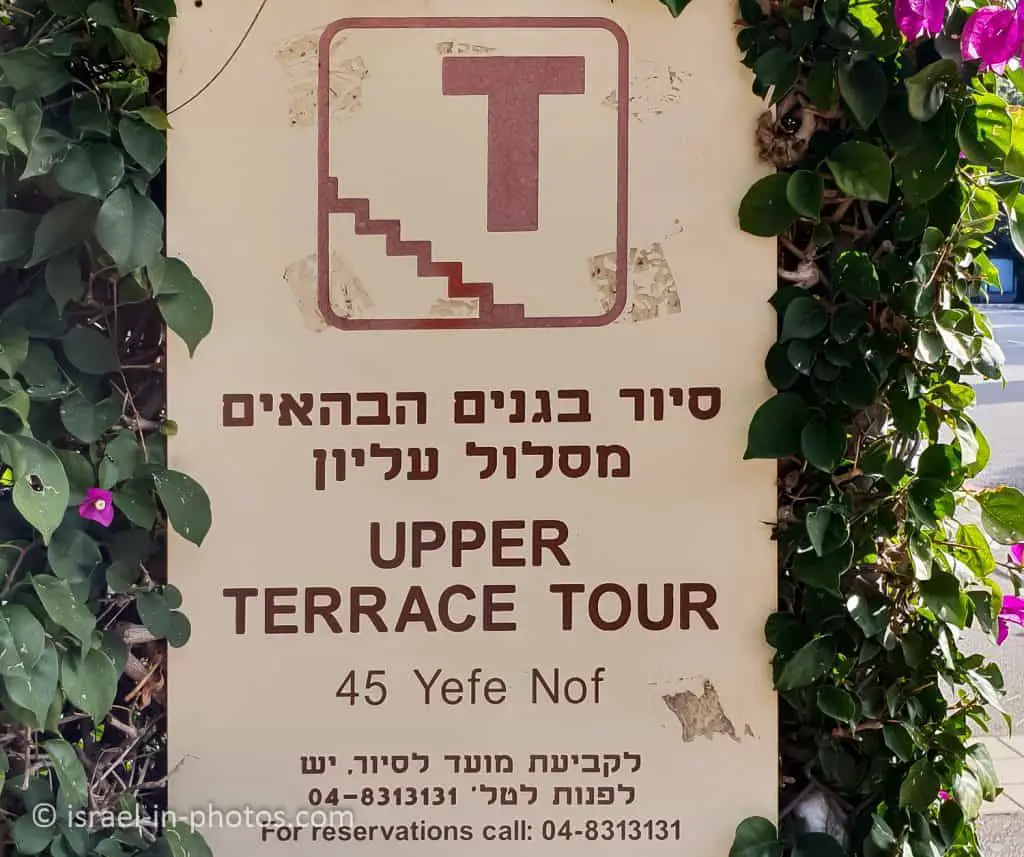
Joining a Walk-in Tour
In 2019, we joined one of the walk-in tours. And as I mentioned above, the tours start at 45 Yefe Nof Street, and you must come in modest clothes.
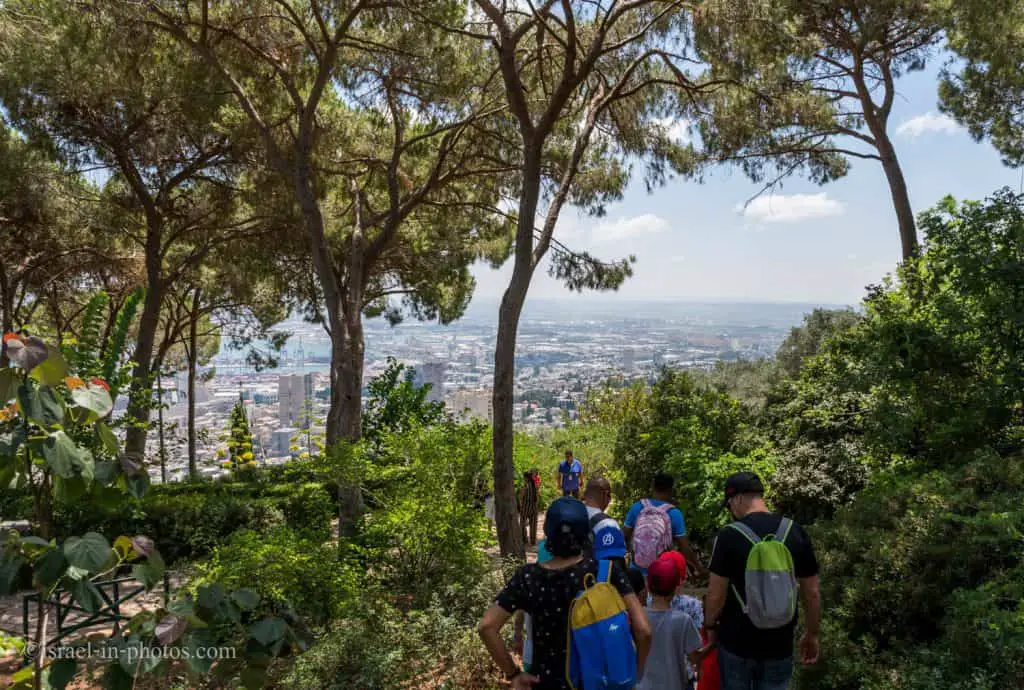
The tour starts near the top entrance and ends near the main entrance. It means that you will go down and descend a little more than 900 steps on your way. Thus, think carefully before joining the tour if you have bad knees.
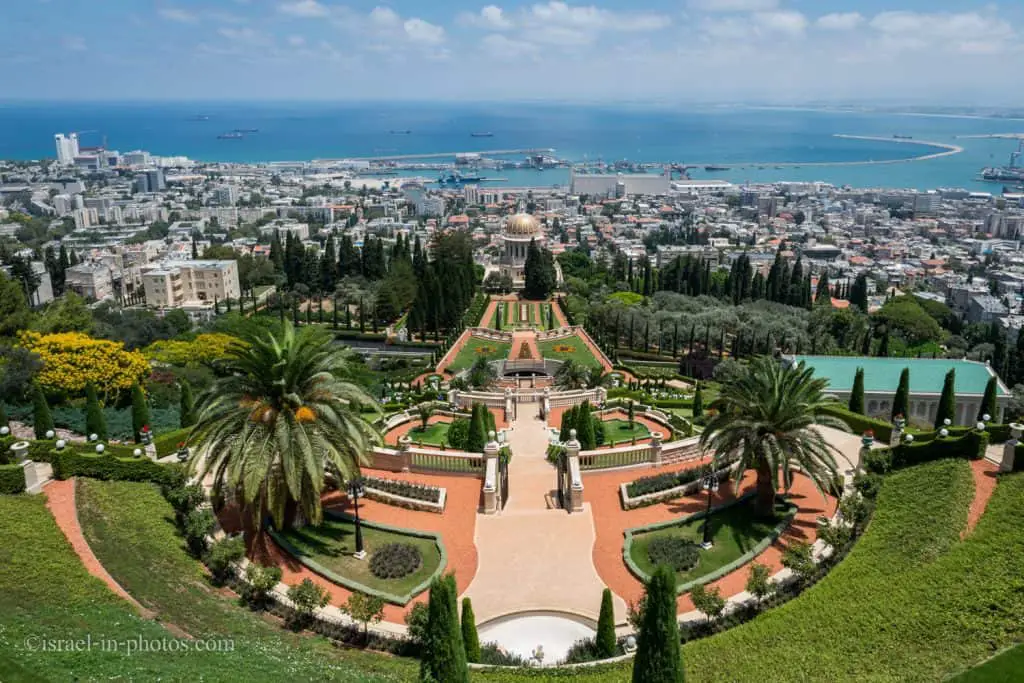
On the way, we made several stops. And on each one, our guide gave us some background information about the Bahai faith, history, and gardens.
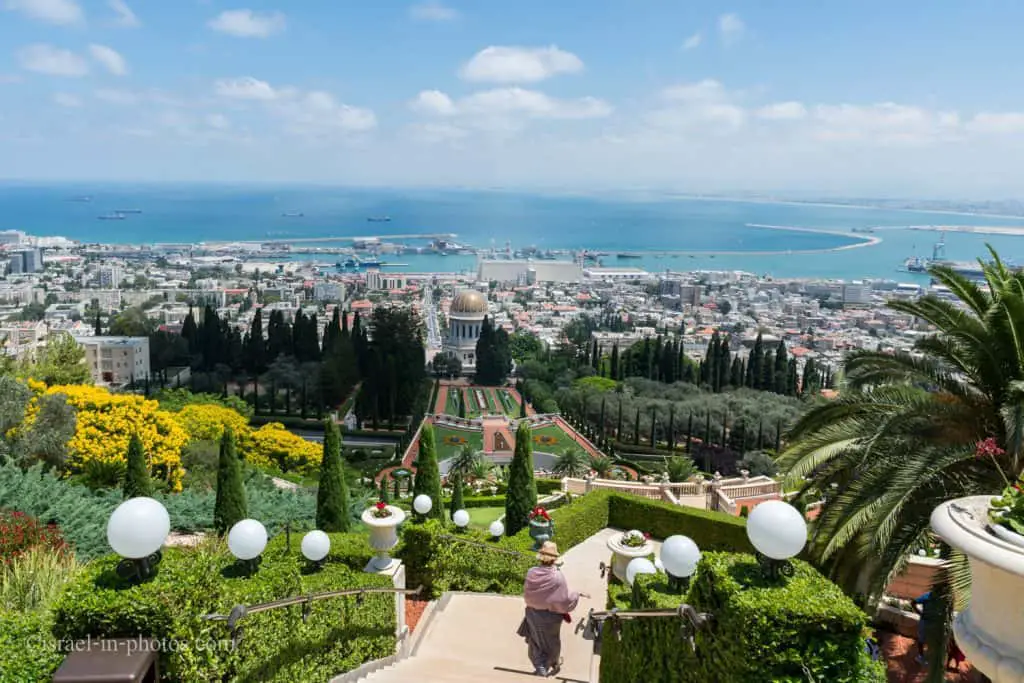
Keep in mind there is little shade. Thus, I would recommend visiting during pleasant weather.
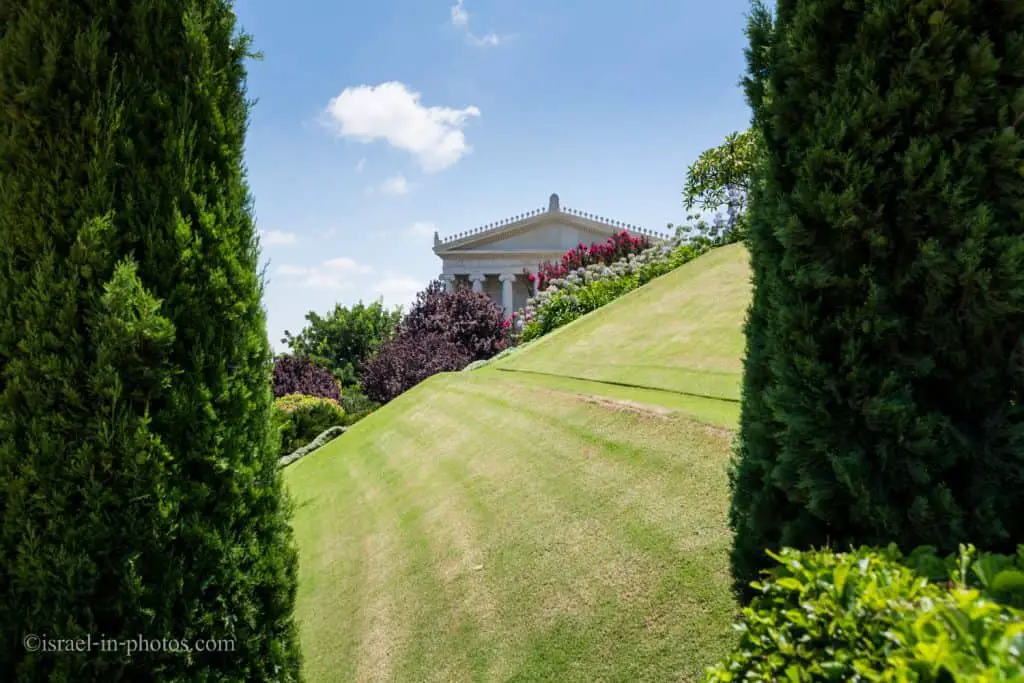
The descent to the Temple (almost to the Temple, as we were on the other side of the street) took us about 45 minutes.
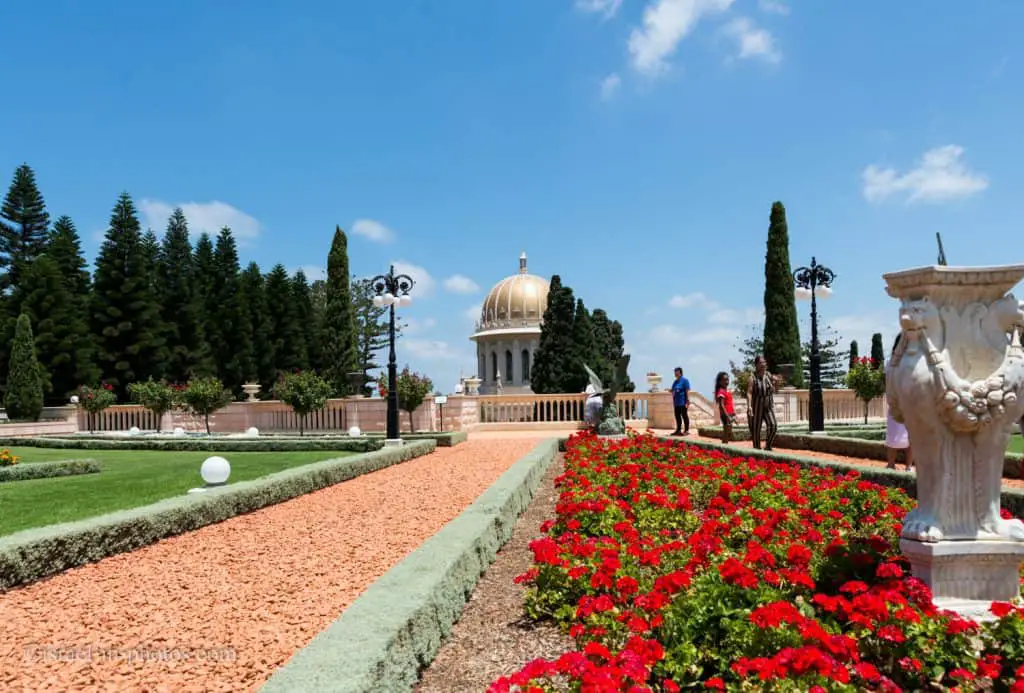
Then, we headed to the visitor information center. And there we saw a short movie telling the history of the Bahai.
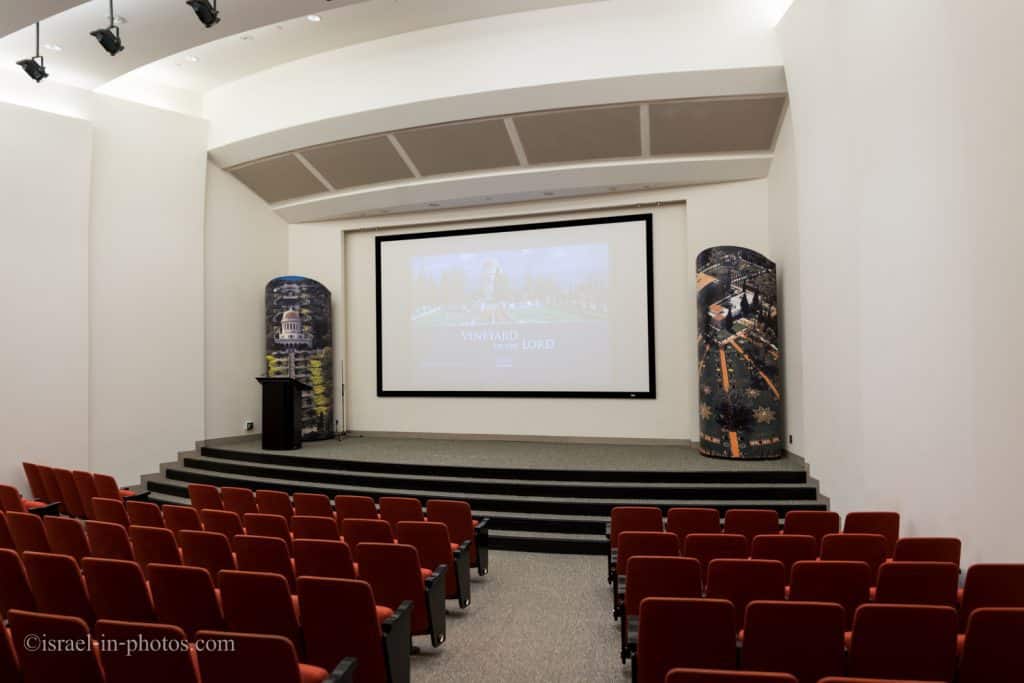
And that was the end of our tour. To return to the top entrance, you can take a bus (line #136 or #23) or walk. And you can not walk through the gardens. You have to use the streets. We decided to burn some calories, and the hike up at a moderate pace took about 50 minutes.
Bahai Faith
Before getting to the gardens, here is a short introduction to the Bahai Faith.
The Bahai Faith is a monotheistic religion based on the teachings of the Bab and Bahaullah, each of whom received a direct revelation from God. The Bahai Faith accepts all the other major world religions’ validity, but it is not a sector offshoot of any of them. Its independent character is reflected in a unique worldview and community structure anchored in its sacred scriptures, religious laws, and calendar.
Basic Bahai Belief
Bahais believe that the unique God, Creator of the Universe, has educated humankind all through history by sending the prophets or messengers, such as Abraham, Moses, Jesus, and Mohammed, as well as Krishna, Buddha, and Zoroaster, who established the world’s major religions.
Thus, Bahais believe that all religions come from the same source and are part of one ongoing educative process. Bahais recognize two prophets for this age, the Bab and Bahaullah.