
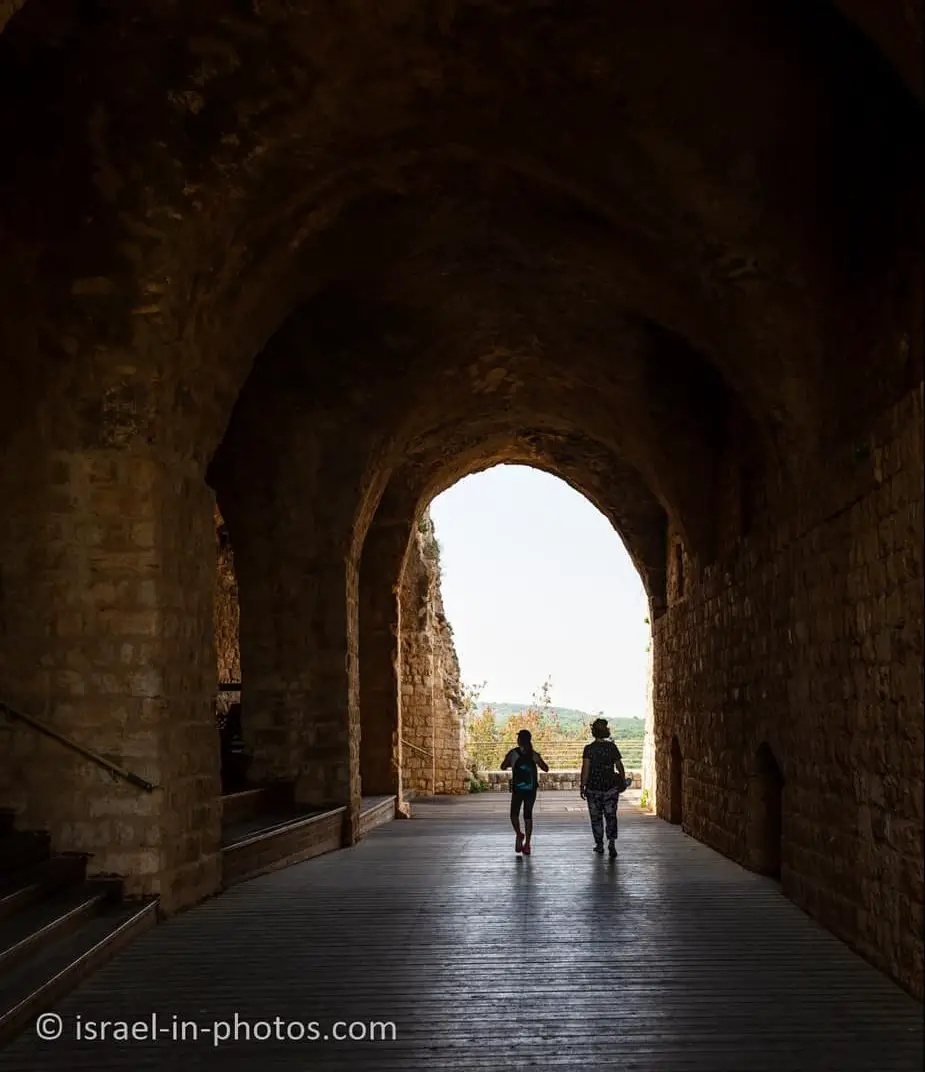
Yehiam Fortress National Park – Visitors Guide

Yehiam Fortress from the Crusader and Ottoman periods, near Nahariya, is a lovely attraction for a short family visit.
Map
Kibbutz and Fortress Yehiam are located in northern Israel, about 8km from Nahariya.
Kibbutz Yehiam is known for its meat products and Malka Beer. And in front of Malka Beer, on the ground of this kibbutz, you can find the Yehiam Fortress.
Free parking is available near the entrance to the national park.
Directions for drivers: Link to Waze and Link to Google Maps
Directions for public transport: Link to Moovit
Interactive map of the area:
We received the following brochure with the site plan and basic info when we entered it.

Here is a map from 2021:

Note: you can click on the map to enlarge it.
Opening Hours
Sunday – Thursday and Saturday: 8:00 – 17:00 (16:00 in winter).
Friday: 8:00 – 16:00 (15:00 in winter).
On holiday eves, usually 8:00 – 13:00.
Note: Since the pandemic, the Israel Nature and Parks Authority has started limiting the number of people in each park. Thus, reservations are recommended through the official site (you can find the link below).
Entrance Fee
Adult 14 NIS, child 7 NIS, and student 12 NIS. And free for National Parks’ annual subscribers.
If you visit several National Parks, consider purchasing a combo ticket. You can find additional info at National Parks And Nature Reserves.
Note: opening hours and ticket prices were updated in May 2022. In any case, recheck the official site before visiting.

Contact Information
Phone: 04-8276600
Yehiam Fortress Campsite
Yehiam Campground was recently upgraded, and in 2022, showers were added.

The campsite has lightning, a faucet, electric outlets, restrooms, and picnic tables. You can find additional info here.

Barefoot Trail
When you visit this National Park, you start from the bottom, near the parking, and go up. To the right of the entrance, you can find the barefoot trail.


The barefoot trail is not that long, but it is an excellent addition that kids enjoy.
You can find a castle drawing on the ground at the end of the barefoot trail.

Children can put on costumes (from a nearby box) and lie on the painting. Then, parents can connect to a camera on a pole above the drawing and photograph children. It is a lovely addition to the park.
The barefoot trail ends near the entrance to Yehiam Fortress and the Byzantine burial caves (#1 on the map).
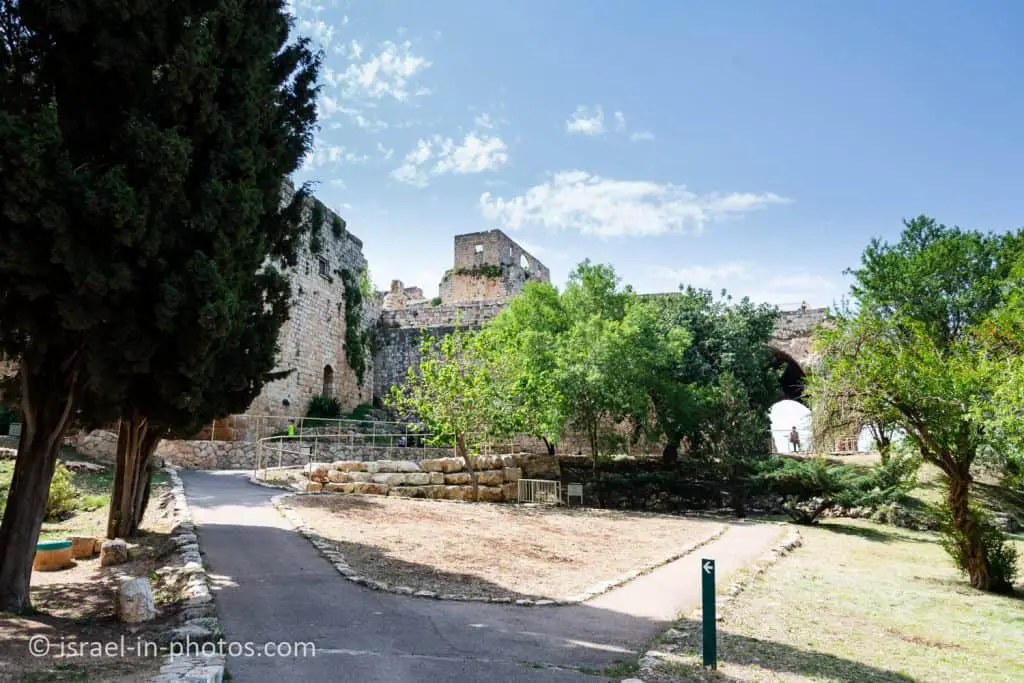
Note: in the bottom part of the photo above, you can see the sign by the entrance to the Byzantine burial cave.
Sound and Light Show
We will go over Yehiam Fortress National Park according to the numbers on the map from 2021. Thus, after the Byzantine burial caves (#1 on the new map), we continue to the sound and light show (#2 on the new map).
As you enter this national park, you can ask when the next screening will be. But from our experience, you can start the movie yourself (there are several buttons by the entrance door).
After pressing one of the buttons (depending on the wanted language), you will see a short movie (about 10 minutes) telling the history of this place.
Main Gate
After visiting the sound and light show, you continue walking along the outer wall till you reach the main gate (#3 on the new map).
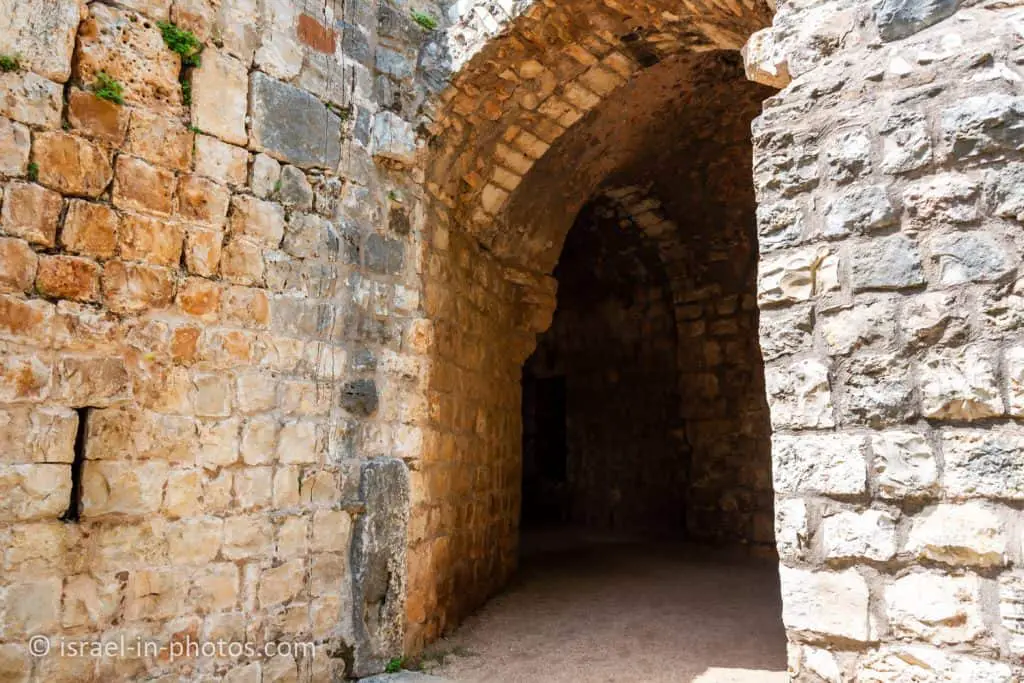
The Fortress Gate – the fortress is entered through a gate from the time of Zahir al-Umar (most of the ruins that can be seen today at the fortress are from this period). A strong, semicircular tower protects the gate. The stones of the threshold were taken from Byzantine period buildings at the site. The gate was closed by two wooden doors plated with strips of metal.
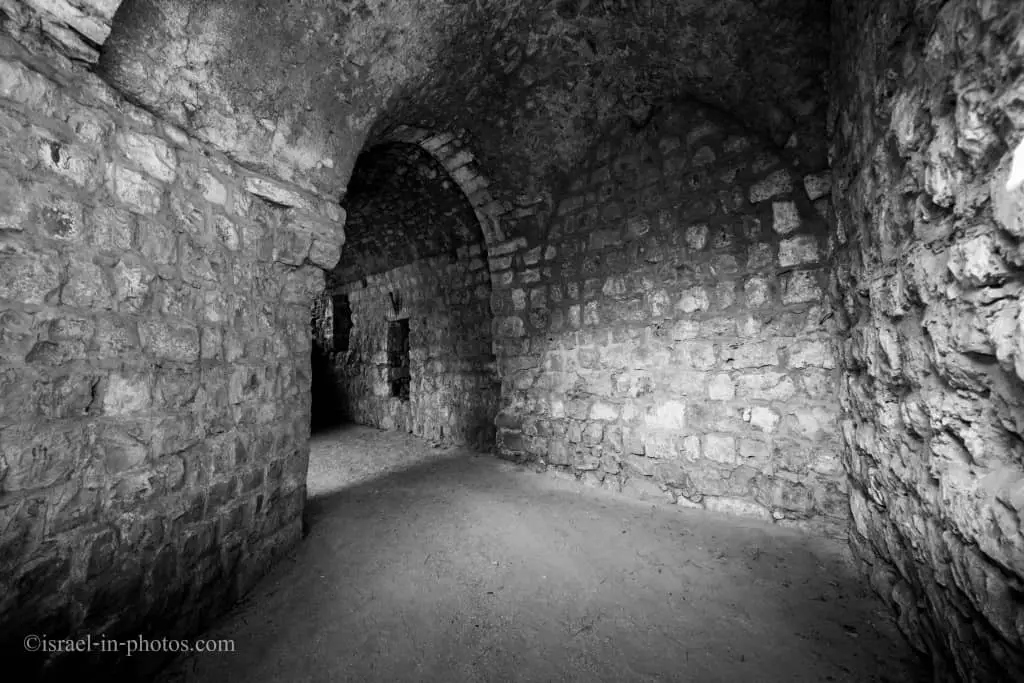
Crusader Wall
After entering the main gate, you will see the Crusader wall (#4 on the new map) and the tower on top.
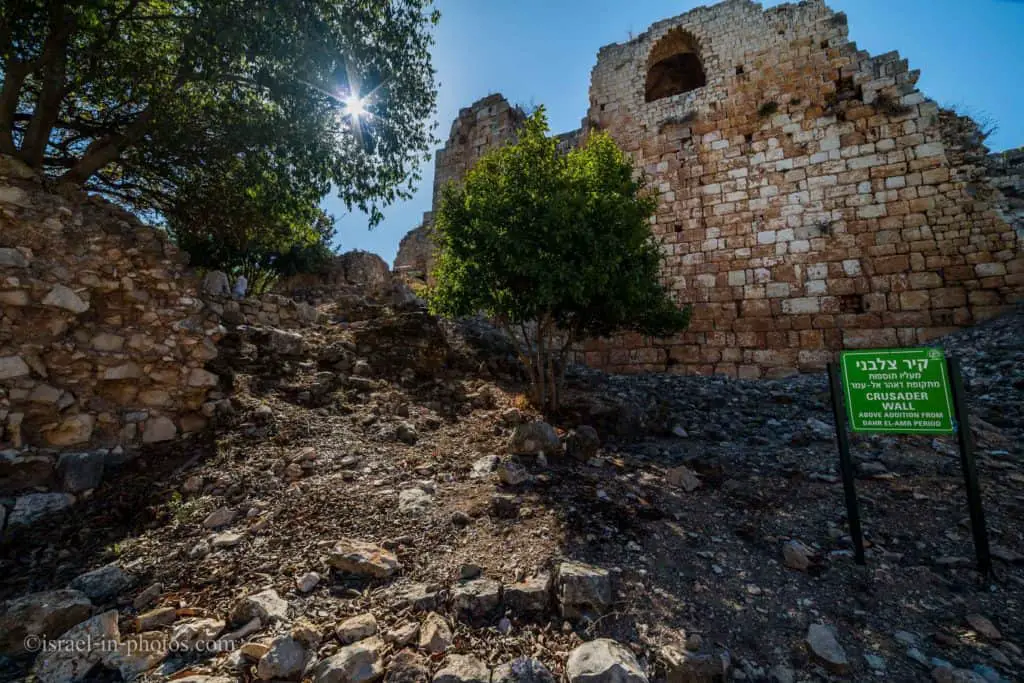
You can see the following stairs that lead to the tower by the wall.
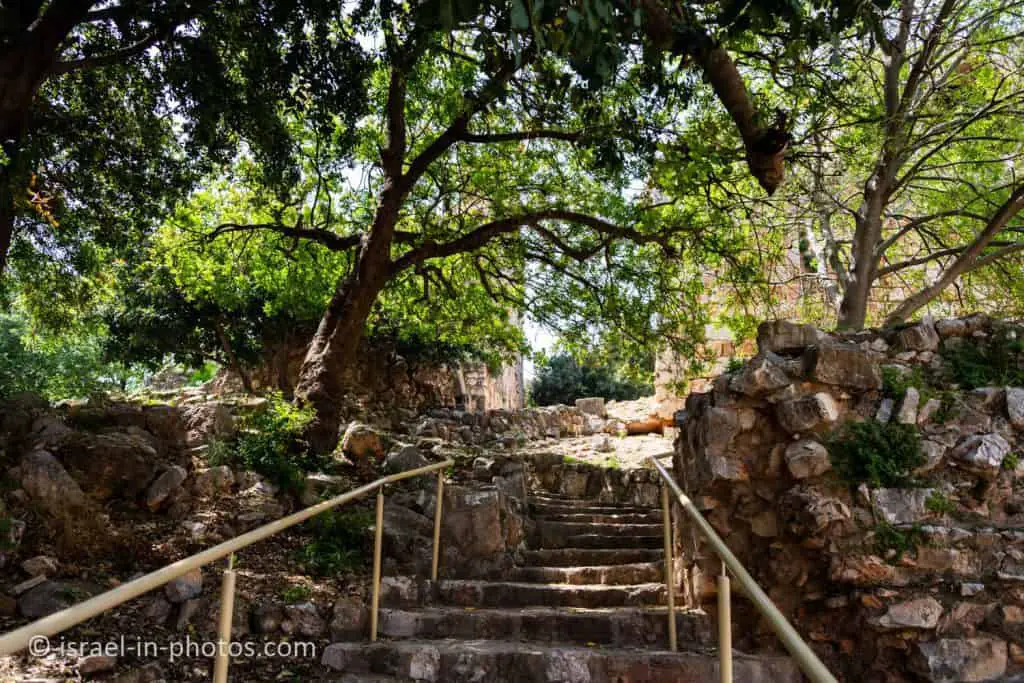
Most of the remains date from the time of the Bedouin Sheikh Daher al-Omar, who ruled the Galilee in the 1760s. He built new walls and towers and surrounded the fortress with a moat.
Crusader Tower
Let’s climb to the Crusader tower (#5 on the new map). You get a 360-degree view of the fortress and Western Galilee region from the top.
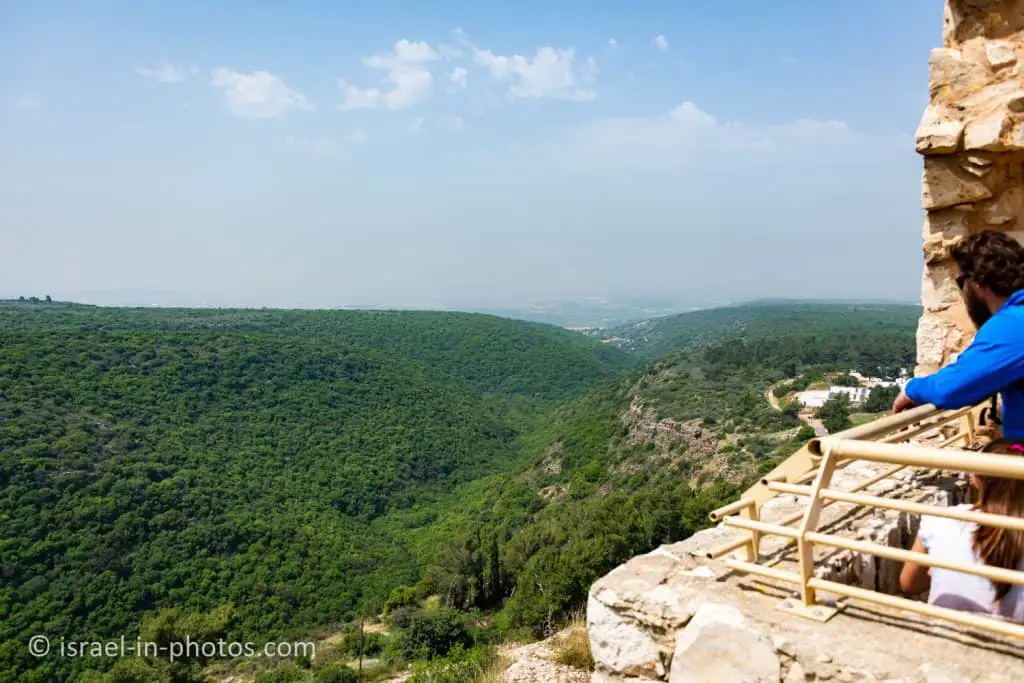
The Crusader Tower – steps lead up to the top of the tower, one of two that existed in the Crusader fortress. This tower has very thick walls, whose strength made it possible to build a three-story tower, today rising to a height of 15 m. A staircase leads up to a lookout balcony on the roof.

